Shetland Mainland
We Shall Return
Leaving Fair Isle was never the same as being finished with it. Some places become part of the route home before you have even left.
The Pandemic Brought Us Here. Fair Isle Gave Us a Reason to Return.
Where Scotland meets Scandinavia, and where the North Sea meets the Atlantic, Fair Isle had already become more than the remote location chosen during a global pandemic.
The source looks backward across 2020 and 2021 with hindsight: while the world was learning the vocabulary of social distancing, isolation and restricted movement, the three travellers took distance almost literally and lived on Britain's most remote inhabited island.
But the important turn comes at departure. The story does not say goodbye. It says the archive is closing for a week until our return. That small phrase changes the meaning of the whole journey. Fair Isle is no longer an escape from circumstance. It has become a place with recurrence built into it.
Memory Starts Organizing the Place Before the Journey Ends

Edge of Two Seas
Fair Isle sits visually and emotionally at the meeting point: Scotland and Scandinavia, North Sea and Atlantic, departure and return.

Hindsight
2020 and 2021 begin to look less like interruption and more like the years in which the ordinary map was replaced by a more deliberate one.
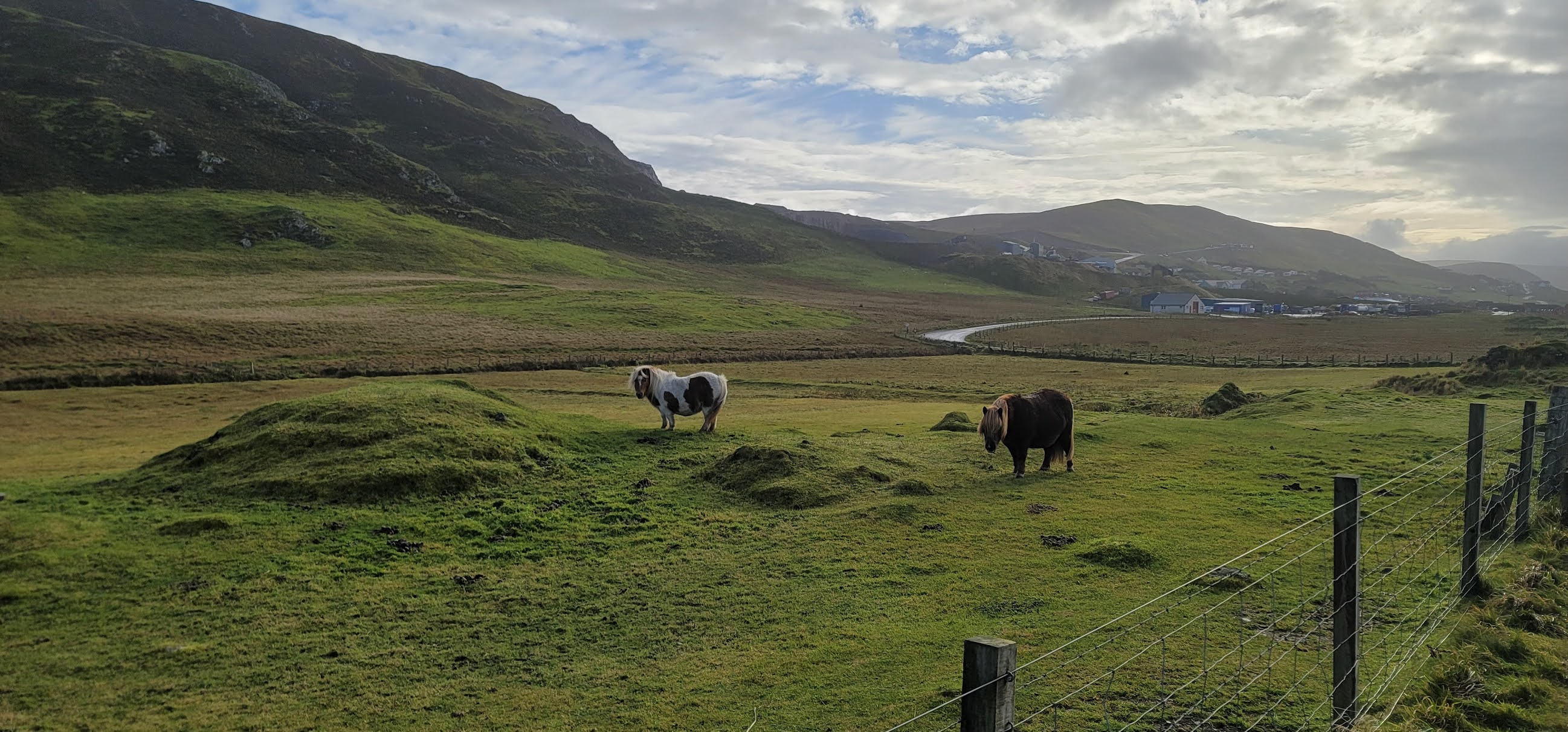
The Promise Inside Departure
Once a place becomes part of identity, leaving it creates an interval rather than a conclusion.
The Return Story in Motion
Field Film 01
The original archive remains part of the page because memory here is visual, moving, and cumulative.
Field Film 02
The second film keeps departure from becoming a static farewell. The story is already pointing forward.
Some journeys end when you leave. Others reveal themselves by making you want to return.
Fair Isle began as radical distance during a global pause. It became a recurring point of calibration—a place worth carrying, revisiting, and seeing again.