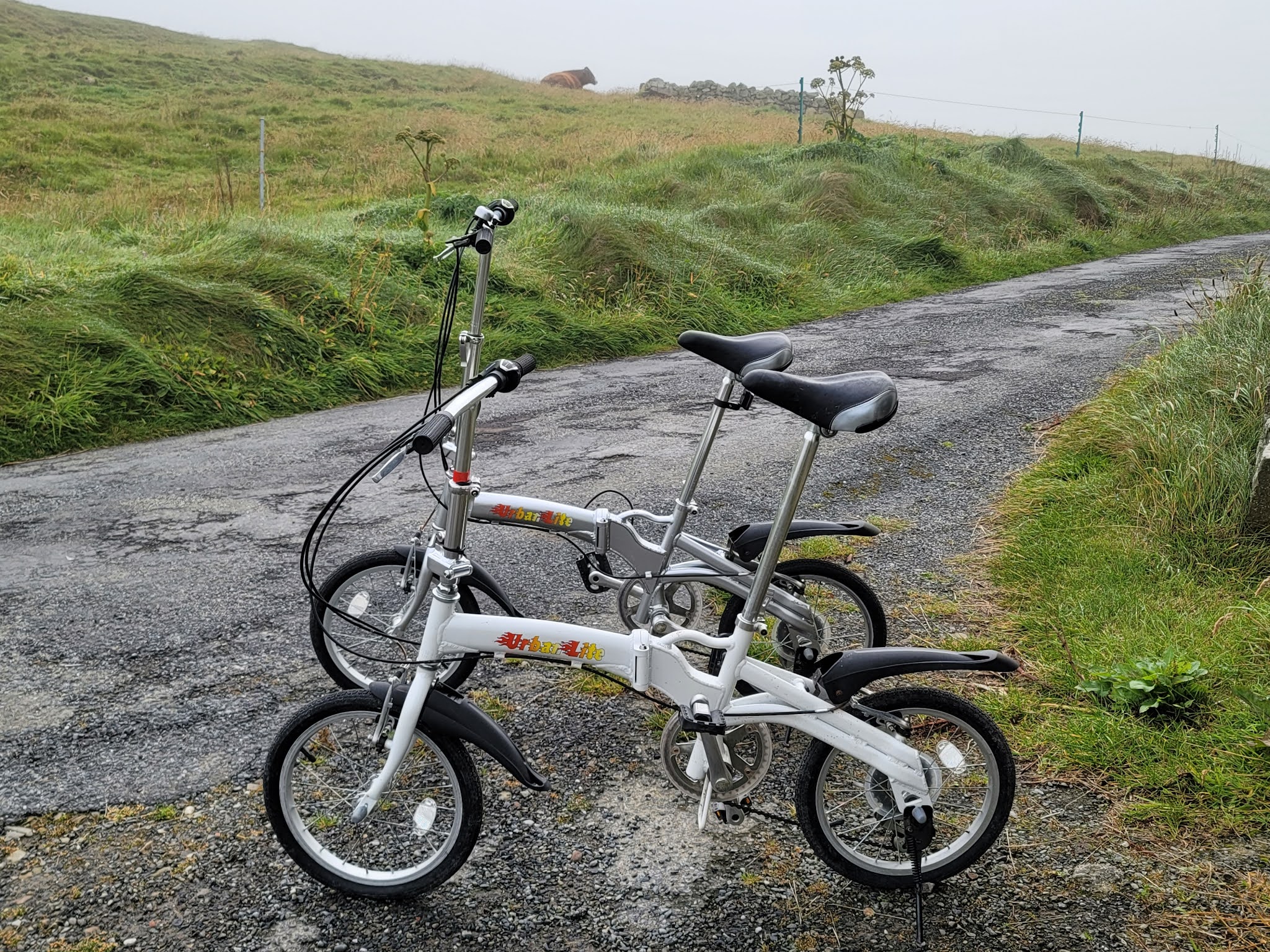
Our Foldable Bikes Arrived By Ferry
Fair Isle: Britain's Most Remote Inhabited Island
A journey to the edge of Scotland, where scale shrinks, weather governs, and small community life becomes the real luxury.
Where the Edge Becomes Legible
Fair Isle is not remote in the empty sense. It is remote in the clarifying sense. Distance strips away unnecessary scale. Schedules answer to weather, not convenience. Community is not decorative. It is infrastructure. The island makes smallness visible as an advantage rather than a deficiency.
That is why the place feels larger than its map coordinates. Every image here points toward the same truth: at the edge of Britain, life is reduced to the essentials of weather, transport, shelter, neighbourliness, animals, and attention. Small is beautiful because small remains knowable.
Still Images from the Edge



Moving Images from the Edge
What Defines the Island
Six Field Notes
Between Shetland and Orkney
Situated between the Shetland and Orkney islands, Fair Isle feels less like a stopover and more like a world with its own logic.
Small, Resilient Community
The island remains small enough that neighbourliness is practical, visible, and unavoidable in the best possible sense.
A Pattern Known Worldwide
Fair Isle knitwear carries the island's name far beyond its size, proving that cultural influence does not require a large population.
The Real Schedule
Flights, ferries, and plans all answer to weather. The island does not negotiate with convenience.
A Place Read at Dog Height
Birds, sheep, slopes, scent, and sea all become more visible when the island is seen through Skyelark's attention as well as human eyes.
Small Is Beautiful
The farther north the journey goes, the more clearly the value of scale, sufficiency, and direct experience comes into focus.
The edge of Scotland is not empty. It is concentrated life.